Why do I need a soil test
by Mathew
(Bundaberg Qld)
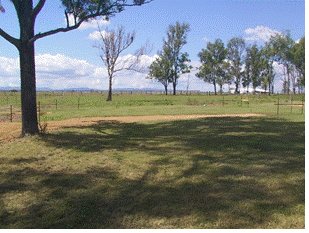

My house site
Q. I have a completely flat block with little or no clay and high enough not to be flooded, we are going to set piers under a raised floor, why do I need a soil test?
A. Getting a Site Investigation report will give you an indication of the expected amount of movement and reactivity in the soils across your building site. On site features (such as trees, creek beds, waterways, rocks), and climatic conditions also need to be considered to receive a 'Site Classification'. Soil movement can occur as swell: when clay layers absorb moisture into their structure and expand, and shrink: when they loose moisture and contract. There is also the dreaded 'floaters' or large rocks that can create havoc when digging footings.
I remember our land was sandy loam, no clay for miles. But the test showed clay 1 metre (3.3ft) down. As the soil was 'soupy' we had to have deep footings, through to the...clay 1.2m (4ft) down!! They also had to be 600mm (2ft) wide. Concrete footings in sandy soil really do require an engineer to design and certify.
Your picture shows a beautiful rural outlook, but unless it is way out bush and you don't intend to certify the house, you will need the test and certificate to get it through the building authority. And it may stop your house from sinking.
Comments for Why do I need a soil test
|
||
|
||