Wind Power for Homes: 10 Essential Tips
Planning wind power for homes can be complex so here are 10 essential tips to get you started on the right track.
1. Do a wind power design assessment first (see below)
A full assessment will determine how much energy the property currently requires, how much it costs, what is the capacity of the wind resource there is, whether there is a location for a tower, the cost of a suitable system, cost of installation and maintenance and in the end, whether there will be a benefit in residential wind power.
2. Buy a complete system
Some people gather and purchase different components as they see bargains, find them for sale in the classified or mix and try to match in their quest for a complete system. This is not advisable due to the possibility of mis- match, incompatability and warranty difficulties. A complete wind power for homes system will compliment itself, componentry be much easier to setup, and easily pay for itself in the end. Remember, there are no 'minor' components of a residential wind power system.
3. Tall towers are essential
Fact is, wind speed increase as you move away from the earth. To get over 8 kph/5 mph wind speed a tall tower is required, especially in residential or semi rural areas, where there are obsticles such as trees. For instance, as a guide, estimate the mature height of the trees on the property and add 10 meters / 30 feet. Or be content with a 30 yr+ payback.
4. Feel out your neighbour
"Not in my backyard"... or the neighbours. There is noise produced by residential wind power, loved by owners of the system, as it means 'power' being produced, loathed by neighbours who believe it to be irritating. It also appears neighbours believe wind power systems to be an eyesore and bring down property values. Make sure you quietly raise the issue before investing any time and especially money in a wind project.
5. Use experts to install your system
Have you built a tower before, laid tower foundations, assembled a turbine or wired one up? The best system can reduce you to tears if it is poorly installed. Residential wind power towers need to be expertly constructed, electricians must install the wiring and get it fully checked before the rotor turns one rotation in anger.
6. Reduce your load
There are many ways to minimise the energy use of the property, before embarking on wind power for homes. if the load is lowered, the system can be smaller or produce more than first thought. Eliminating phantom loads, replacing older appliances, lowering water heater settings, installing energy star lighting, installing attic insulation, applying reflective paint to the roof ect will all help reduce the load.
7. Use quality equipment
Super reliable equipment is the base level here. The turbine can be spinning night and day for decades. It needs to be the best you can buy, and a little bit more. Efficiency will beat cost every time in this game so talk to every product salesman available and research till it hurts.
8. Be realistic
A small setup with a 1kw turbine on a short tower is a hobbyist venture. To get a payback, you need a large rotor, tall tower and very few property obstacles. By payback I mean a return on the investment that pays off within a decade. Wind power for homes is much more expensive per KW than solar power so a wind power design assessment is imperative.
9. Maintain the system
To keep a rotor spinning and generating power, good maintenance is imperative. Once a year you need to inspect and service the turbine mechanism, the tower fasteners, wiring and its insulation and for signs of vermin or corrosion.
10. Maintain safety
There are many hazards to installing and operating a wind power turbine. Using an experienced crew will reduce the hazards, but good communication is the key. Working at height presents many risks and using cranes, ladders, cherry pickers or climbing gear, can cause injury or death. Spinning and yawing turbines can surprise a maintenance worker, electrical shock hazards are at all points of the device, batteries can explode and are corrosive. Lastly, ensure the system has an easy disconnection system, overload / over-current cut out device and effective grounding.
Careful wind power design to create wind electricity on a property can change a virtual money pit into a sustainable operation.
Residential wind energy has a capital cost that is initially daunting, and many false promises are made by sales people in the industry, not to mention ongoing maintenance.
And if the design is wrong, that cost can be a burden. Investigation and planning are the key as with most investments.
There are 6 basic conclusions to be made before initiating the design of a wind power operation.
- The home is energy efficient
- The property has permission to install a wind turbine tower
- The property has space for a tower
- The property has a good wind resource
- The property owner has finances to commit to capital costs and maintenance
- The property owner has a long term outcome mindset
Wind Power Design Plan: Elements
Carry Out an Energy Assessment of the Property
- Existing KW Hours the property uses
- Amount the property was charged per KW
- What is using the energy, and in what amounts
Describe the Goals of Creating Wind Energy
- Lower property environmental impacts
- Save property owner money
- Long term investment
Understand the Property's Relationship and Access to the Grid
- Existing and reliable connection
- Off grid but potential to connect
- Off grid and no access
Evaluate alternate energy options
- Solar arrays
- Solar water heating
- Natural gas
- Wood heating
Cost Options to Increase Existing Energy Use Efficiency
- Passive solar enhancements
- Insulation and double glazing
- Utilise off peak time zones
Determine Potential Tower Sites
- Assess property wind energy potential
- Map land gradients and obstacles
- Determine wind speed averages at height
Design a Suitable System
- Select tower, rotor and generator assembly
- Select electronic components: inverter, grid interface
- Select storage components and or backup generator
Cost the Selected System
- Capital / component costs
- Investigate incentives: subsidies, bonuses, discounts, renewable energy certificates
- Quotes for installation
- Estimated cost of maintenance, component guarantee and replacement
Determine Efficiency and Payback of the Potential System
- Total cost of componentry and on-costs
- Utility net / payback schemes
- Cost of finance
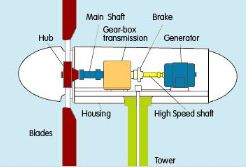
Wind power for homes in residential / domestic areas typically range from 300 Watts to 5kW, but in some instances a 10kW or 20kW turbine could be used. A typical installation will use a 1kW turbine. So how do wind turbines work? Turbines use the wind to turn a rotor that drives a generator. They come in many shapes and sizes.
The most common is the horizontal axis turbine with blades like an aircraft propeller and a tail or vane to direct it into the wind. Larger wind generators are more suited to non-urban areas as the turbine needs to be mounted on a tower and makes some noise in operation.
A wind turbine produces an alternating voltage and current, and these are rectified to provide DC at the correct voltage to charge batteries, similar to the system in a motor vehicle. Reference: Wiki.
A number of vertical axis and more aerodynamic wind generators are being developed and show promise in overcoming wind turbulence and noise problems in urban use. Domestic wind generators are usually used in stand alone power systems and designed to charge a battery bank, but more recently they are grid connected as well.
 Wind speed map Wind speed map |
 Turbine plan Turbine plan |
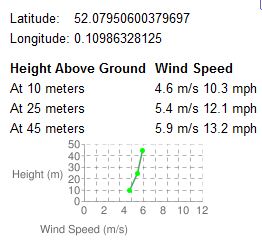
Obtaining a Wind Speed Map
Wind power for homesrequires a reliable wind resource. There are many factors that influence wind pressure and output including air density, the swept area of a rotor, wind speed and turbulence. The later can be affected by trees, houses and hills, but can be reduced by tall system towers.
A wind speed map provides a complete data set of wind occurrence, frequency, direction, seasonal variation and speed at height in a local area. A very useful piece of information for the novice and professional intending to build a wind turbine for home use. Here is a NSW Wind Atlas to help determine wind speeds.
Components of residential wind turbines
- Tower: structure to get the generator up into the wind
- Rotor: spinning blades that convert wind into mechanical motion
- Generator: device that converts motion into electrical energy
- Base and anchors: tower foundation and support
- Transmission conduit: wire cable between devices and controls
- Control and inversion devices: converting ac to dc power and shutoff controllers
- Grid interface and metering and or
- Battery array
Reference: Wind Power Basics: A Green Energy Guide
Disadvantages of wind power for homes
Variable and unreliable wind source
Wind may spin a rotor for a week but then it could sit idle for two weeks, and also blow during the day and not at night. Available wind can be very seasonal, i.e. most of a particular season there may be very low wind pressure.
Bird fatalities
There are reports of birds flying into spinning rotors, although this is more of an occurrence of commercial wind turbines.
Residential aesthetics
Neighbours are known to be at best unpredictable with their response to the appearance of wind towers. Although the owner often believes they are a thing of beauty, others say they are a blight on the landscape.
Noise concerns
The sound of a wind turbine is very different from that which is naturally occurring and this change is often what is why it perceived to be noise. The size, height and speed of a small wind turbine will alter the perceived loudness.
You can go to Sustainable house design
or return to Kit home basics homepage